
Retrospective
David Lynch
Unmaking Sense
Walter Benjamin saw surrealism as a “dialectical optic that perceives the everyday as impenetrable, the impenetrable as everyday.”[2] That flip in the hierarchy of dream and reality characterises the works of the late, but timeless American filmmaker David Lynch (1946–2025). About a century ago, surrealists André Breton, Louis Aragon, and Jean Goudal lauded the young medium of film for its involuntary dissolution of those borders, for transmuting everyday objects into uncanny beings with innate poeticism. Surrealism and its symbols function as a wake-up call, exposing the false promises of today; and film, too, can lend a glimpse into the unruly machinations of the human unconscious.
Lynch attended art school in Philadelphia, which instilled a kind of melancholy in his early shorts. The ‘moving painting’ Six Men Getting Sick was shot in an empty hotel room, where he propped his rented 16mm camera on a dresser and constructed a ‘sculpture screen’ out of resin: we witness the process of creation and the ejection that follows (the titular six men getting sick) on a loop. It is no wonder that Alphabet is a hellish vision of schooling and learning, its animation and sound restless to the point of hysteria. Against all institutional structures, hierarchies, and rules of logic, stood David Lynch’s imagination.
Lynch readily admitted his own lack of knowledge about the origins and intentions of The Grandmother, as well as his other works. In one scene, the castigating parents (Virginia Maitland and Robert Chadwick) appear to emerge out of a hole in the ground for some unknown reason, which Lynch rationalizes as “it just had to be that way”. The film lasts over 34 minutes and chronicles a boy’s repeated (and ultimately successful) attempts to plant and grow himself a loving grandmother. All the film sounds were made by Alan Splet himself, since the existing recordings were unsuitable. His inventiveness was measured in over 60 working days, to the point where he used a huge air-conditioning duct to simulate the grandmother’s whistle. It was those films that brought David Lynch to the sunshine shimmers of Los Angeles, where Blue Velvet and Lost Highway would later be born.
Voiceover takes up a more prominent role in The Amputee and the Dynamic 01 anthology, with the increased use of abstract, poetic language, the words of which are always spoken softly. Discordant lines and unruly dialogue defy the idea that film is an audiovisual unity bound by rationale and causality. By deepening the split between spectatorial expectations and the (sur)reality of his films, David Lynch makes space for the strong, almost cosmic presence of desire in all of its frightening aspects. Even when the grumpy protagonist of Dumbland pours his wrath over unsuspecting targets (including clotheslines, and postmen), he, too, is fighting the pull of desire – maybe not for something, but against something we shall never know.
The one-minute wonder of Lumiere explicitly frames the unknown as alluring. In the shadows of the Bolex camera lurks a libidinal presence: a dead woman’s body approached by three police officers, a lady lavishly dressed in white lace, the flutter of a bird’s wings, and a scientific experiment where another woman is kept in a full-size aquarium – these images and sounds last mere seconds, but their inexplicable effect lingers on. Simply put, surrealism is not about not making sense but about unmaking the sense in the first place in order to remake it anew. The parallel existence of what we’d call nonsensical and that of the highest libidinal order is also the meeting point of two worlds, at the scission of which we find the meaning of the word ‘Lynchian’.
Savina Petkova
[2] Benjamin, Walter. “Surrealism: the Last Snapshot of the European Intelligentsia”. In: Bronner, Stephen Eric and Douglas MacKay Kellner, ed. Critical Theory and Society: A Reader. London: Routledge, 1989, p. 181

The Alphabet
David Lynch, USA, experimental, animation, 1968, 4'

The Amputee
David Lynch, USA, fiction, 1973, 5'
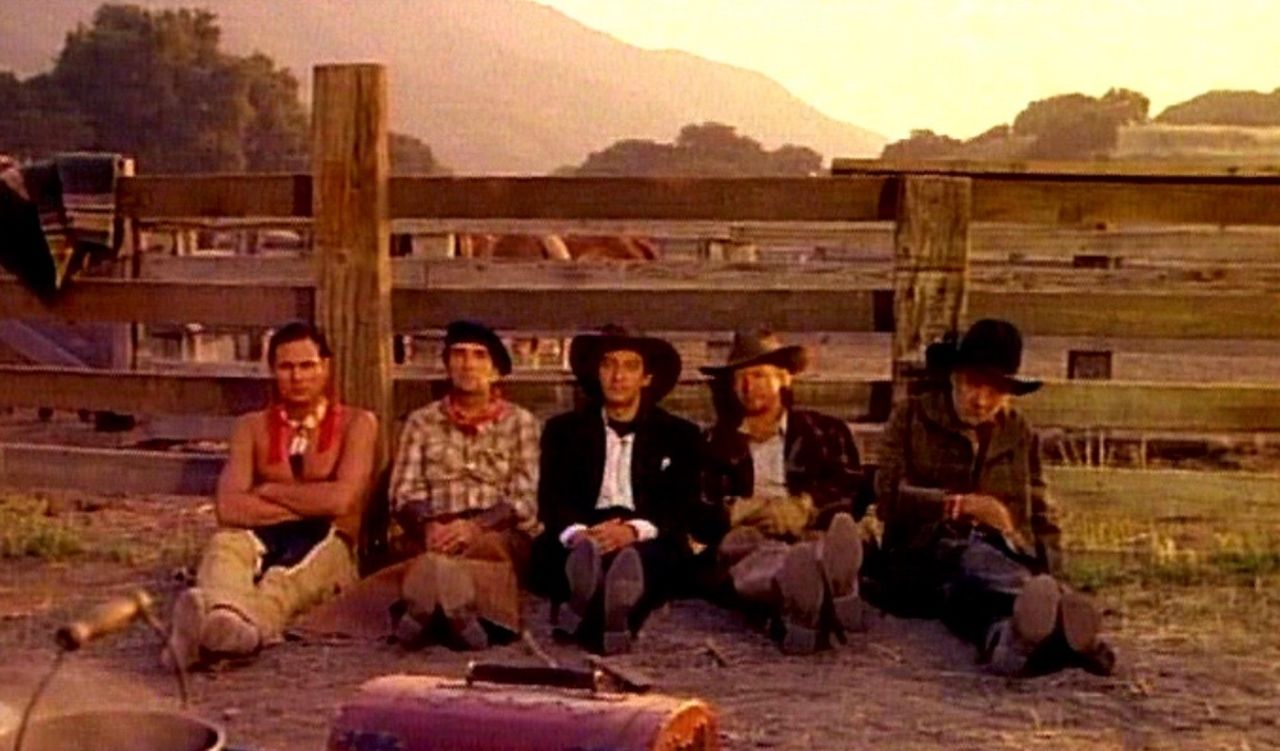
The Cowboy and the Frenchman
David Lynch, USA, fiction, 1988, 26'

Lumière and Company: Premonitions Following an Evil Deed
David Lynch, Denmark, France, Spain, Sweden, eksperimentalni, 1995, 1'

Six Men Getting Sick
David Lynch, USA, experimental, animation, 1966, 4'

The Grandmother
David Lynch, USA, fiction, 1970, 34'

The First Image – David Lynch
Pierre-Henri Gibert, documentary, 2019, 29'

Dumbland (8 episodes)
David Lynch, USA, animation, 2002, 34'

Darkened Room
David Lynch, USA, fiction, 2002, 8'

Boat
David Lynch, USA, fiction, 2003, 8'

Lamp
David Lynch, USA, documentary, 2003, 31'
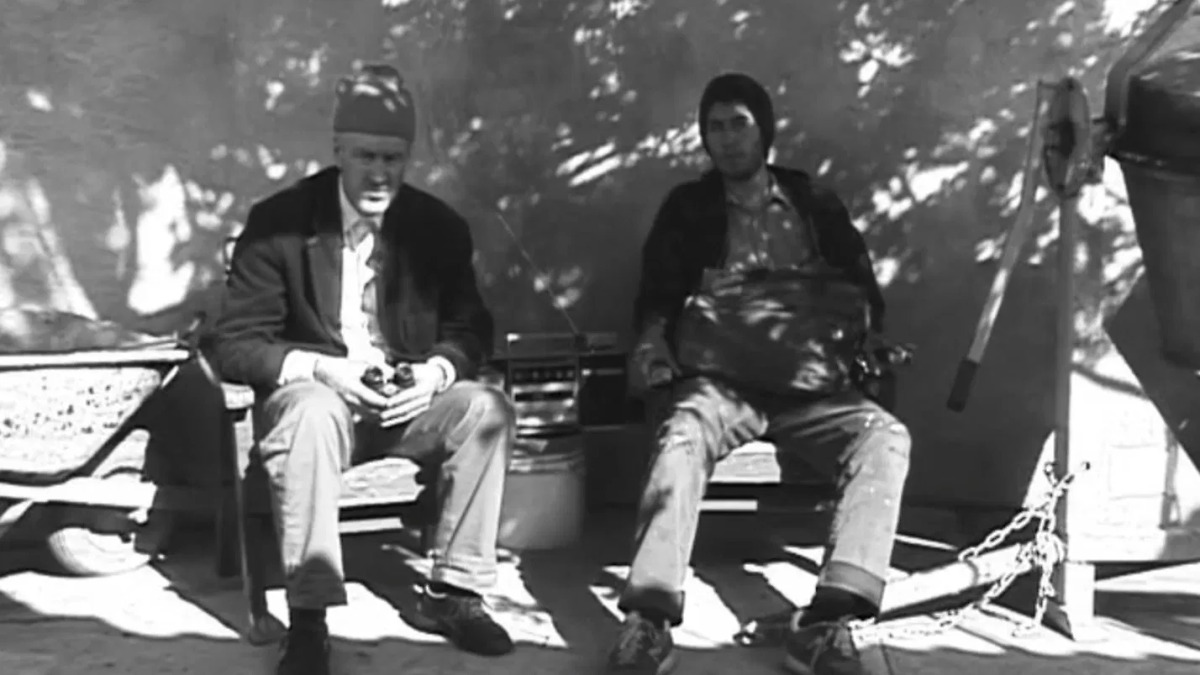
Out Yonder: neighbor Boy
David Lynch, USA, fiction, 2002, 10'

Industrial Soundscape
David Lynch, USA, experimental, 2002, 11'

Bug Crawls
David Lynch, USA, animated, 2004, 5'
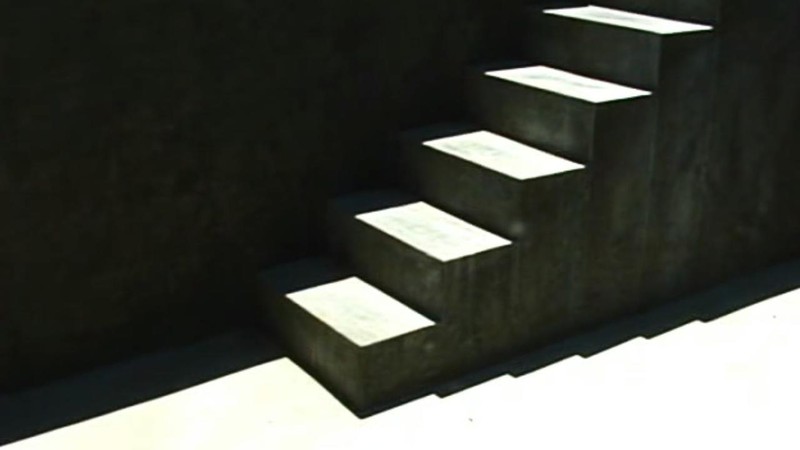
Intervalometer Experiments
David Lynch, USA, experimental, 2004, 5'